BLDC vs. AC Induction Motor:
8 Technical Advantages You Should Know
✅ 8 Proven Advantages of BLDC Motors vs AC Induction
- 1. Permanent-magnet rotor – No excitation current required
BLDC motors use neodymium or ferrite magnets on the rotor, eliminating the need for stator excitation current. This results in higher mechanical power output from the same electrical input power, boosting overall efficiency by 10–30% compared to induction motors. - 2. No rotor copper loss or iron loss → Lower temperature rise
Since the rotor in a BLDC motor contains no windings or eddy-current loops, there is zero rotor copper loss and minimal core loss. This dramatically reduces heat generation inside the motor, improving reliability and enabling compact, sealed designs. - 3. High starting torque & high locked-rotor torque
BLDC motors deliver maximum torque from zero speed. This characteristic is ideal for valve actuators, electric vehicles, and industrial mechanisms requiring strong instantaneous torque for opening/closing valves or overcoming inertia. - 4. Output torque is proportional to voltage/current → Simple torque sensing
Because torque is linearly related to the phase current (or supply voltage), torque monitoring circuits become simple, low-cost, and highly reliable — no complex flux estimators needed. - 5. Smooth speed regulation via PWM voltage averaging
By adjusting the average DC voltage using Pulse-Width Modulation (PWM), the BLDC motor achieves smooth, step-less speed control. The drive circuit is inexpensive, compact, and robust — superior to bulky AC variable frequency drives (VFDs). - 6. Reduced inrush current with low-voltage PWM start
Starting the motor with a low PWM duty cycle effectively lowers the starting current, reducing stress on the power supply and protecting switching devices. This feature is critical for battery-operated systems and frequent start-stop cycles. - 7. Lower electromagnetic radiation & less harmonic pollution
BLDC motors are powered by PWM-modulated DC voltage (square wave or trapezoidal), which generates less electromagnetic interference (EMI) and injects fewer harmonics into the grid compared to AC induction motors that require sinusoidal PWM (SPWM) or SVPWM inverters. - 8. Closed-loop speed control – Constant speed under varying load torque
Using Hall sensors or sensorless back-EMF detection, the BLDC motor controller can maintain precise, constant speed even when load torque changes. This is a decisive advantage for robotics, CNC machines, and conveyor systems where speed accuracy is mandatory.
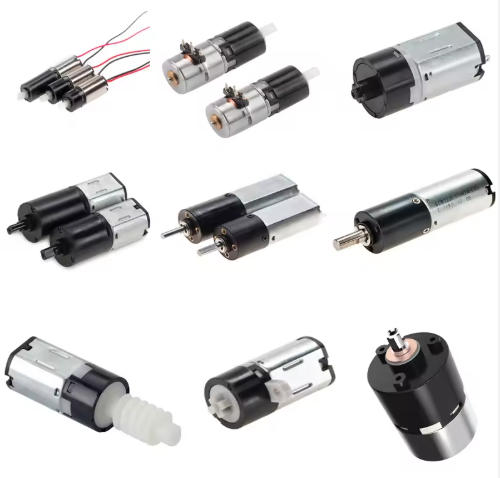
⚙️ Engineering deep dive — two decisive performance advantages
In a BLDC motor, electromagnetic torque is directly proportional to the phase current (T = Kt × I). This linear relationship allows straightforward torque measurement using a low-cost shunt resistor. For AC induction motors, torque versus slip is highly non-linear, requiring complex vector control or torque estimators.
When mechanical load increases (e.g., friction change or external force), the closed-loop BLDC controller instantly adjusts PWM duty cycle to maintain target speed. Induction motors, especially in open-loop V/f control, exhibit inherent speed drop (slip) proportional to load torque, making them less accurate for precision motion.
🔁 PWM Speed Control & Simplicity
The DC-fed BLDC requires only a 3-phase inverter bridge and basic PWM generation; no complex sine-wave synthesis or bulky DC-link chokes. This cuts BOM cost and improves reliability.
🌿 Low Harmonic Pollution & Clean Grid
AC induction motors driven by variable frequency drives (VFDs) produce high harmonic currents (5th, 7th, 11th) that distort grid voltage. BLDC PWM rectifiers/drives generate far lower harmonic content and comply easier with IEC 61000-3-2.
🚀 High Starting & Locked-Rotor Torque
Valves, dampers, and electric actuators demand high torque at stall. BLDC motors naturally provide rated or even peak torque at zero RPM, outperforming induction motors which typically have lower starting torque per ampere.
📌 BLDC vs AC Induction — at a glance (performance summary)
🌡️ Lower rotor temperature
💪 High starting torque
📐 Linear torque vs current
🕹️ Simple torque detection
🎛️ Smooth PWM speed variation
🔌 Reduced inrush current
📡 Low EMI emission
🌍 Minimal grid harmonics
⚙️ Closed-loop constant speed
🔁 Load disturbance rejection
These characteristics make Brushless DC motors the preferred choice for robotics, electric vehicles, drones, industrial servos, medical equipment, and precision valves. While AC induction motors still dominate simple fixed-speed or ultra-high-power applications, BLDC technology delivers superior dynamic performance and energy savings.
Custom for your drawing/specification/parameters, welcome too.
Email: chinaok321@gmail.com ( 24Hrs reply)
WeChat/Mob: 8613713792667