How to Evaluate Tattoo Machine Motor Quality: 5 Critical Testing Methods
For professional tattoo artists and manufacturers, a tattoo machine motor is the heart of the craft. The precision and consistency of its output directly impact both the quality of the artwork and skin safety.
To determine whether a tattoo machine motor is high-quality or defective, it must be comprehensively evaluated across four core dimensions: performance stability, noise control, temperature management, and load response.
Below, Tattoo Machine Motor (a professional designer and manufacturer) breaks down the 5 essential steps to test and evaluate a tattoo machine motor like a pro.
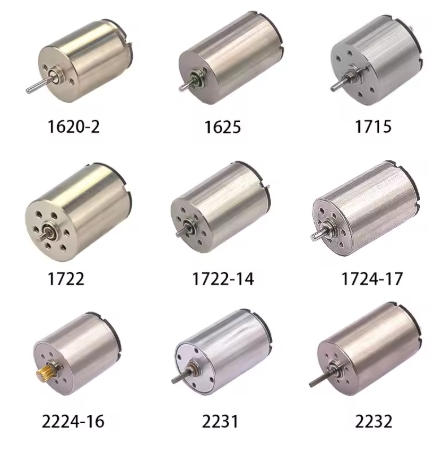
1. The Audio Test: Monitoring Noise and Running Smoothness
A premium motor speaks through its silence. When running, a high-quality tattoo motor should start quietly and emit only a faint, high-frequency hum.
- What to watch out for: There should be no harsh friction sounds or intermittent clicking.
- Diagnosis: A distinct “clicking” sound usually indicates misaligned internal gears. A loud, intensifying “buzzing” or vibrating noise points to worn bearings or loose internal coils.
2. Touch & Temperature Test: Checking Thermal Control
Excessive heat is the number one enemy of motor longevity and tattooing consistency. To test this, run the motor continuously for 15 minutes, then touch the motor casing.
- The Standard: The temperature rise should be below 15°C (it should feel slightly warm to the touch, never hot).
- Diagnosis: If the casing temperature feels hot (exceeding 40°C), the motor suffers from current overload, poor heat dissipation, or an internal short circuit. This causes thermal degradation, which directly messes with your needle stroke consistency.
3. The Load Test: Speed Stability During Skin Penetration
A great motor maintains its power even when facing resistance. First, run the motor completely under a no-load condition at a standard 6–9V range and note the baseline RPM. Next, apply a load to simulate the resistance of penetrating the skin.
- The Standard: A high-quality motor should have a speed fluctuation of less than ±3%.
- Diagnosis: If the RPM drops by more than 10% under load, the motor lacks adequate torque or has poor dynamic balance. On the skin, this deficiency leads to uneven lines, snagging, and excessive skin trauma (ink bleeding/blowouts).
4. Electrical Parameter Measurement: Using a Multimeter
For a truly objective evaluation, you need to measure the internal electrical health of the motor using precise tools.
- Resistance Check: Disconnect the power and measure the winding resistance. Compare it to the manufacturer’s nominal value. Any variance greater than 10% indicates component aging or a partial short circuit.
- Insulation Resistance Test: Use a megohmmeter to measure the insulation resistance between the motor casing and the circuit. It must be >1MΩ. Anything lower poses a serious risk of electrical leakage and shock.
5. Dynamic Response: Low-Voltage Start and Low-End Torque
A motor’s ability to start at ultra-low voltages is a massive indicator of its overall engineering quality and low-end torque performance. Slowly increase the voltage from zero and record the exact startup voltage.
- The Standard: A superior tattoo motor typically starts smoothly between 2.5V and 4V.
- Why it matters: The lower the startup voltage, the stronger the low-speed torque. A motor with robust low-end torque operates stably across a wide 3–10V range, making it highly versatile for various tattooing styles (from soft shading to heavy lining). Weak motors only stabilize at high voltages, severely limiting an artist’s creative freedom.
About Us
At Tattoo Machine Motor, we specialize in the design, development, and manufacturing of high-performance motors engineered specifically for the tattooing industry. Contact us today to elevate your hardware standards.
Custom for your drawing/specification/parameters, welcome too.
Email: chinaok321@gmail.com ( 24Hrs reply)
WeChat/Mob: 8613713792667