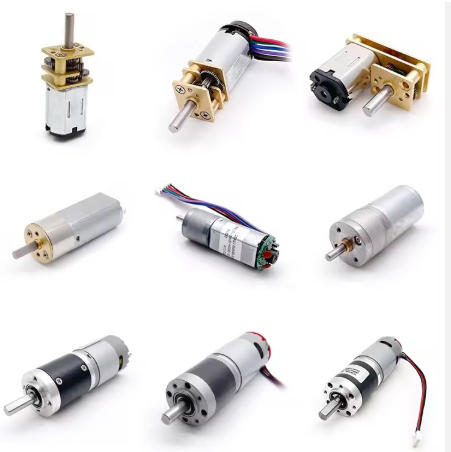
Key Control Aspects of Brushless DC (BLDC) Motors
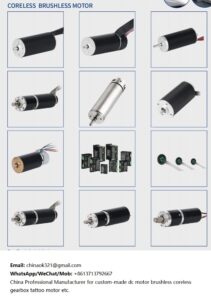
Brushless DC (BLDC) motors have emerged and evolved hand-in-hand with advanced digital control technology. Today, digital control—primarily executed via microcontrollers and Digital Signal Processors (DSPs)—stands as the industry-standard method for managing BLDC motor performance.
Understanding foundational BLDC motor control principles is essential for optimizing efficiency, torque, and reliability in high-precision micro-motor applications.
Primary BLDC Motor Control Methodologies
1. Speed Control (PWM Regulation)
The fundamental speed control principle of a BLDC motor mirrors that of a traditional brushed DC motor.
- The Method: Pulse Width Modulation (PWM) is utilized to control the average voltage applied to the armature windings.
- The Execution: By adjusting the duty cycle of the PWM signal, the average voltage—and consequently, the rotational speed—is precisely regulated. Integrating a microcontroller or DSP with dedicated PWM outputs makes implementing high-end speed control loops highly efficient.
2. Commutation Control (Phase Switching)
Because BLDC motors lack mechanical brushes, switching the current between stator windings must be managed electronically. Commutation control is split into two primary paths:
- Sensored Systems: For motor setups equipped with physical position sensors (such as Hall effect sensors or encoders), commutation is triggered systematically based on real-time feedback. This ensures the current switches to the correct phase at the exact rotor position.
- Sensorless Systems: In sensorless BLDC motor control, hardware sensors are eliminated to reduce cost and space. Instead, the microcontroller calculates the optimal commutation point by monitoring and processing back-EMF (Electromotive Force) signals from the unenergized phases to determine when to switch the current.
3. Direction Control (Phase Sequencing)
Reversing the rotation of a brushless DC motor is straightforward. By altering the energization sequence of the motor phases (e.g., changing an A-B-C phase sequence to C-B-A), the magnetic field rotates in the opposite direction, seamlessly switching the motor between forward and reverse operation.
Pro Tip for Motor Longevity: While digital controllers handle the operational physics, maximizing the lifespan of your BLDC hardware requires routine maintenance, proper thermal management, and regular inspection of electrical connections.
Contact Our Engineering Support Team
Are you designing high-performance equipment or looking for specialized micro-BLDC hardware solutions?
- Email: chinaok321@gmail.com
- WhatsApp / WeChat: +86 13713792667
- Official Website: www.tattoomachinemotor.com
Custom for your drawing/specification/parameters, welcome too.
Email: chinaok321@gmail.com ( 24Hrs reply)
WeChat/Mob: 8613713792667