Installation Methods of Geared Motors (Reduction Motors)
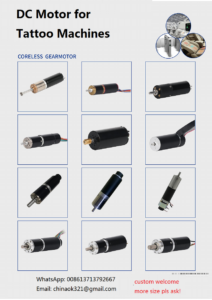
Geared motors (also known as reduction motors) are characterized by high efficiency, high reliability, long service life, easy maintenance, and wide application. The number of stages can be classified into single-stage, two-stage, and three-stage gear reduction motors. The main installation and arrangement methods include expanded type, coaxial type, and split-flow type.
1. Expanded Type (Two-Stage Cylindrical Gear Reduction Motor)
In the expanded type of two-stage cylindrical gear reduction motor, the gears are positioned asymmetrically relative to the support bearings. When the shaft undergoes bending and torsional deformation, the load distribution across the tooth width becomes uneven. Therefore, the shaft should be designed with high rigidity, and the gears should be positioned away from the input or output end to minimize uneven loading.
2. Split-Flow Type (Two-Stage Cylindrical Gear Reduction Motor)
As introduced by the iron-core motor manufacturer, the split-flow type geared motor has the following characteristics: The position of the extended shaft can be arranged on either side, making it convenient for the overall configuration of the machinery. The gears in the split-flow stage are machined as helical gears — one rotating to the right and the other to the left — to cancel out axial forces. One of the shafts should be allowed to have slight axial movement to prevent the gears from jamming.
geared motor installation, reduction motor installation, geared motor mounting methods, expanded type geared motor, coaxial type geared motor, split-flow type geared motor, two-stage cylindrical gear motor, single stage geared motor, three stage geared motor, helical gear motor, geared motor shaft rigidity, geared motor axial movement, gear reduction motor configuration
3. Coaxial Type (Coaxial Gear Reduction Motor)
As shared by the iron-core motor manufacturer, the coaxial type geared motor has the following characteristics: The radial dimensions are compact, but the axial dimensions are relatively large. Because the intermediate shaft is large, its deflection under load is significant, leading to more severe load concentration along the tooth width. Additionally, since the centers of the two-stage gears must align, the load-bearing capacity of the high-speed stage gears is difficult to fully utilize. Furthermore, lubrication of the bearings in the middle part of the reduction motor is also more challenging. The input and output ends of the reduction motor are located at opposite ends of the same axis, which imposes certain limitations on the overall configuration of the transmission system.
That concludes the overview of the installation methods for geared motors. Proper selection of the installation type is essential for optimizing performance, load distribution, and system layout.
Custom for your drawing/specification/parameters, welcome too.
Email: chinaok321@gmail.com ( 24Hrs reply)
WeChat/Mob: 8613713792667